

Coreopsis

Commonly called Tickseed, the low growing coreopsis is an old-time favorite. It is actually a perennial in warmer regions but is more often grown as an annual elsewhere.
The yellow and gold flowers are borne on thin, long stems that hold them well above the foliage for good effect. Once they start appearing––towards the end of spring––they go non-stop until summer turns into fall. Deadheading ensures more flowers.
Grow coreopsis in a sunny area. They are great as ground covers and bedding plants.
Marigold (Tagetes)
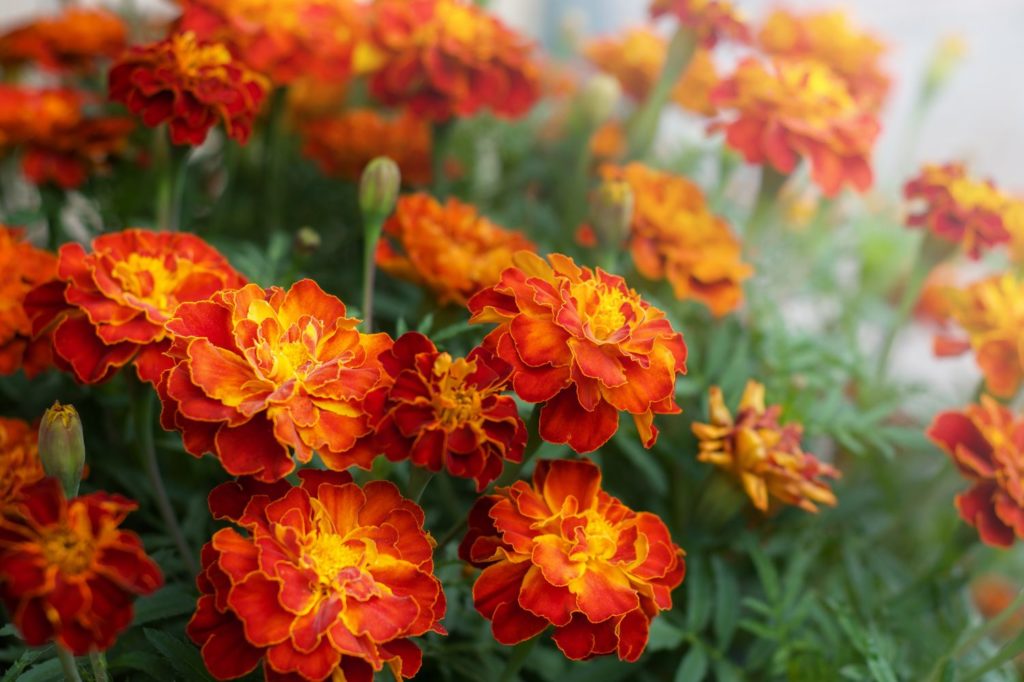
Often grown in vegetable gardens to keep off pests, French Marigolds are well known to gardeners. They are compact in size, with a bushy, slightly spreading habit.
Their yellow-orange flowers, often having varying amounts of red-maroon, usually have a single or double layer of petals. Their African cousins are taller and grow upright, producing large pom-poms in yellow, orange and cream.
Both these types, as well as the petite ‘Signet’ marigolds, love warm weather and bloom continuously from spring until the first frost.
Marigolds are easily grown from seeds, but the seeds collected from hybrids may not give the expected results. Use them as bedding plants in sunny areas. Regular watering is a must.
Yarrow

Common yarrows with off-white or yellow flowers and weed status have undergone a transformation with several new color choices in shades of pink, cream, peach and red.
They can add color and variety to your summer garden with their long blooming season. The fern-like leaves also are an asset, not to mention the medicinal value of the herb.
Grow yarrow in full sun, but make sure that it stays within limits. The flat-topped flower heads look good in flower arrangements, so keep cutting them off to reduce self-seeding.
Candytuft
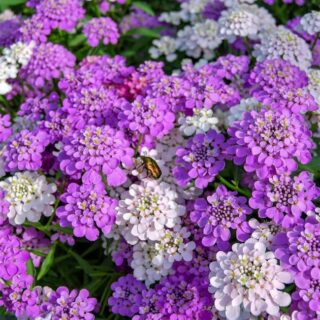
These hardworking, ground hugging evergreen plants can brighten up any nook and corner in the garden with its clusters of tiny flowers that start appearing in spring.
There’s no stopping them after that; the green mounds expand as they get covered in white, purple or pink flowers, so they are great as fillers anywhere in the garden or in containers. An additional attraction is that they retain their leaves throughout winter in USDA zones 5-9.
Candytuft can grow in full sun as well as partial shade. Keep the soil moist by regular watering.
Purple coneflower / Echinacea
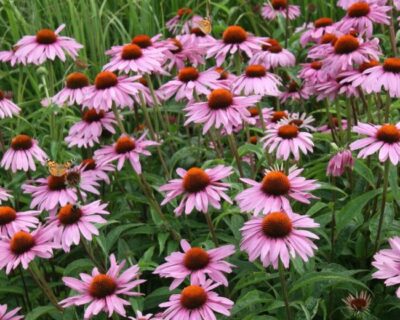
No garden should be without this native flowering plant producing large, purplish pink flowers.
The common name obviously comes from the prominent cones in the center of a single layer of slightly reflexed petals. New hybrids offer more color and form choices now.
Purple coneflower is propagated by root or clump divisions. Plant this perennial carefully because it does not like being disturbed later.
Flowering all through summer and into fall, its flowers can be harvested for making an herbal tea. In fact, all parts of the plant have medicinal properties.


